
Racing Tipsters Australia: What Should You Check Before Paying for a Service?
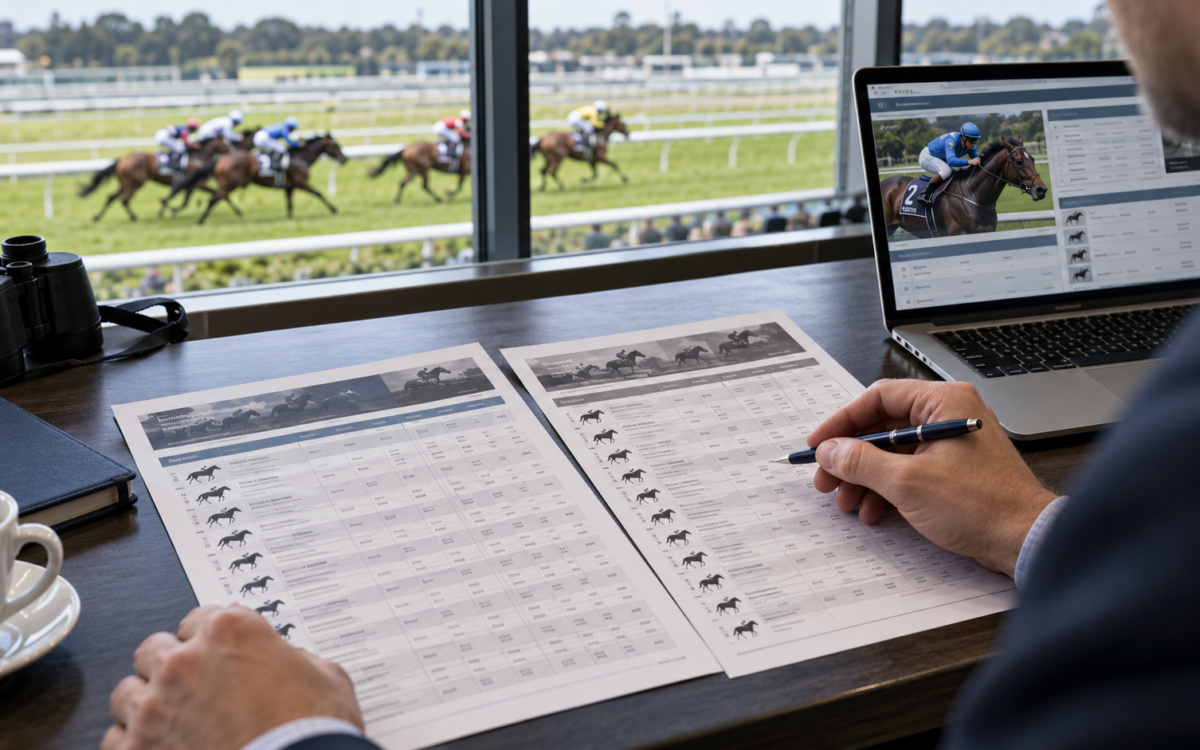
Anyone can post a winning bet slip.
The horse gets up, the price is circled, and suddenly you’re looking at another bloke claiming he’s cracked the racing game.
But what about the losing bets? The prices that were actually available when the selections went out? The weeks when nothing went right?
That’s what I want to know.
When you’re comparing racing tipsters in Australia, picking winners is only part of the equation. You need to understand the process behind the selections, how results are recorded and whether the subscription offers enough value to justify its cost.
I’ve spent years studying racing, working with bloodstock, watching trials and analysing form. That experience has taught me that the horse most likely to win isn’t necessarily the horse worth backing.
Price, race conditions and betting discipline all matter.
So does transparency.
Before paying for any Australian horse racing tipping service, including Jig Racing, here’s what I’d examine.
Before You Pay for Racing Tips, Demand Evidence You Can Check
An impressive Saturday doesn’t prove that a tipping service is profitable.
A few winning selections might look convincing, but they tell you very little without the losing bets and stakes that produced the overall result.
Published Results Mean Little Without Every Losing Selection
If somebody advertises a profitable tipping record, my first question is simple: can I see how those figures were calculated?
A useful performance record should include:
- The date, meeting and race of every selection.
- The nominated horse and bet type.
- The advised odds when the tip was released.
- The recommended stake or number of units.
- The result, including profit or loss.
- The cumulative performance, including losing periods.
Time-stamped selections are particularly useful. They help establish whether a recommendation was published before the race rather than highlighted afterwards.
I’d also examine the prices.
Suppose a horse was tipped at $5.00 but shortened to $3.20 before many subscribers could place their bets.
The difference matters. At the shorter price, the potential return is substantially lower.
A service might show a profit using its originally advised prices while subscribers following the same selections achieve very different results.
Ask how the service handles price movements and whether its historical returns are based on odds that were realistically available.
If you can’t examine the losing selections, you can’t properly assess the advertised results.
A Hundred Tips Can Paint a Very Different Picture From a Thousand
A profitable month is encouraging, but it isn’t proof of a reliable long-term approach.
Horse racing results fluctuate. A handful of longer-priced winners can produce an impressive short-term return, just as a series of losses can make a reasonable analytical approach look poor.
That’s why sample size matters.
A record covering several hundred consistently documented selections generally tells you more than a record covering a few dozen.
But the number of bets isn’t everything.
I’d also check:
- How long the results cover.
- Whether the staking method remained consistent.
- Whether every advised bet is included.
- Whether the service changed its selection approach during the period.
- Whether historical losing periods are still visible.
A larger sample can provide stronger evidence, but it cannot guarantee future profitability.
And without transparent records, even an impressive-looking sample size deserves scrutiny.
The Cheapest Tipping Service Can Still Be a Poor Buy
Subscription cost matters. You’re paying for a service before you’ve even placed a bet.
But the cheapest subscription isn’t necessarily the best value.
The real question is what you’re receiving and whether it’s worth the ongoing expense.
Compare the Full Subscription Cost, Not Just the Trial Offer
Many Australian tipping services advertise weekly, monthly or longer subscription plans.
Some also offer inexpensive introductory trials.
Before signing up, check when the trial ends, what you’ll be charged afterwards and how cancellation works.
At Jig Racing, our subscription packages currently advertise a 30-day trial for $1, followed by these options:
| Subscription | Advertised price | Billing cycle |
| Weekly | $9.99 | Every week |
| Monthly | $29.99 | Every month |
| Three months | $79.99 | Every three months |
A valid payment method is required to start the trial.
If you don’t cancel before the 30 days end, your chosen subscription is charged automatically. The plan then continues renewing according to its billing cycle until cancelled.
Cancellation is managed through the member dashboard. The Jig Racing FAQs explain the process and current conditions.
Prices and offers can change, so always check the published terms before joining.
Remember that your subscription fee is a real expense, separate from any money you might stake.
For example, a $29.99 monthly subscription costs $359.88 across 12 monthly billing periods, excluding any introductory offer or future price changes.
That doesn’t tell you whether the service is good or bad. It simply shows why the ongoing cost deserves consideration.
What Are You Actually Getting for Your Money?
Not every tipping service provides the same level of information.
Some supply a horse’s name, the race and a recommended stake. Others provide race previews, written explanations, market observations or runners to follow.
Neither approach guarantees better betting results.
But if you’re paying for an analyst’s expertise, I’d want to understand what that expertise contributes.
Jig Racing’s listed features include tips and best bets, race previews, Blackbook access, late mail alerts, and voice and text analysis. We also produce racing podcasts.
Those features give subscribers several ways to follow the thinking behind our selections.
If you simply want a horse’s name, a basic tipping service may be enough.
If you want to understand how the race might unfold and why a particular runner interests us, the quality of the analysis becomes more important.
Don’t confuse the number of tips with the quality of the service.
Twenty selections aren’t automatically better than five. I’d rather identify fewer worthwhile opportunities than manufacture extra bets simply to fill a schedule.
Horse Racing Tipsters Should Explain Their Bets, Not Just Name a Horse
Every tipster claims to study the form.
But what does that actually mean?
A horse’s last three finishing positions are easy to find. The harder part is understanding what those performances reveal and how they relate to the next race.
That’s where analysis should earn its value.
Form, Trials, Replays and Race Maps: The Work Behind a Selection
A horse might finish sixth and still run an excellent race.
Perhaps it was trapped wide, held up at a crucial stage or forced to race against an unsuitable tempo.
The form guide records sixth. The replay provides the context.
That’s why I spend considerable time studying previous runs, barrier trials and jump-outs.
But spotting an unlucky horse isn’t enough.
I also want to know how the next race is likely to unfold.
Will the horse lead? Can it settle in a suitable position? Is there enough early pressure to compromise its preferred racing pattern?
Then there are the conditions.
A horse that performs well on firm ground may struggle on a heavy track. A wide barrier can be a greater disadvantage at some racecourses than others.
Distance suitability, fitness, jockey bookings, weight changes and the quality of the opposition all contribute to the assessment.
These factors interact.
A favourable race map doesn’t help much if the horse is unsuited to the distance. Strong recent form may count for less when the track conditions change.
The objective is to build a reasoned view of the race, then compare that assessment with the available odds.
Why Josh’s Bloodstock Knowledge Changes How We Assess Young Horses
My bloodstock background adds another dimension when assessing young and lightly raced horses.
Two-year-olds, three-year-olds and maidens can be difficult to evaluate because their exposed race form is limited.
Some arrive at the races without an official start.
You can’t assess those runners in the same way as an experienced horse with twenty starts.
I examine pedigree, physical development and trial performances.
What is the horse bred to do? Does its pedigree suggest early speed or greater suitability over longer distances? What is it showing in its trials?
A staying-bred youngster displaying natural speed in a short trial might be worth following.
Equally, an expensive, well-bred horse can attract market attention without showing enough on the track to justify its price.
Breeding provides clues, not certainty.
The useful part is comparing those clues with what the horse actually demonstrates.
My bloodstock experience helps inform those assessments, particularly when conventional race form has little to offer.
It doesn’t mean every young horse we identify will win.
For more on this side of our work, read about Josh McLoughlan’s bloodstock expertise and trial analysis.
More Winners Don’t Automatically Mean More Profit
One of the easiest mistakes when comparing racing tipsters is focusing on strike rate without considering the odds.
A service can identify plenty of winners and still lose money.
Another might select fewer winners but produce a stronger historical return.
The relationship between winning frequency, price and staking is what matters.
Strike Rate Versus ROI: Two Numbers That Tell Different Stories
Strike rate measures the percentage of selections that win.
Return on investment, or ROI, measures net profit or loss relative to the total amount staked.
Consider two hypothetical tipsters making 100 win bets with a fixed $10 stake on each selection.
| Metric | Tipster A | Tipster B |
| Total bets | 100 | 100 |
| Winning bets | 50 | 25 |
| Strike rate | 50% | 25% |
| Average winning odds | $1.80 | $5.00 |
| Total staked | $1,000 | $1,000 |
| Total returns | $900 | $1,250 |
| Net profit/loss | -$100 | +$250 |
| ROI | -10% | +25% |
Hypothetical example only, using decimal odds and level win stakes. These figures are not Jig Racing performance results.
Tipster A wins half the selections but loses $100 overall.
Tipster B wins only a quarter yet finishes $250 ahead in this example because the successful bets return more relative to the stakes.
That’s why a high strike rate isn’t automatically a sign of profitability.
The formula for ROI is:
ROI = (Net profit ÷ Total amount staked) × 100
Historical ROI also needs context.
Short reporting periods, unusually successful runs, changing stake sizes and unavailable advised prices can all affect the reported figure.
And subscription fees create another cost that isn’t usually included in a tipster’s betting ROI.
The Right Horse at the Wrong Price Is Still a Bad Bet
This is one of the most important principles in my approach to racing.
I might assess a horse as the most likely winner without believing it’s worth backing.
The price still needs to make sense.
Suppose I assess a horse as having a 25% chance of winning.
That corresponds to fair decimal odds of $4.00.
If a bookmaker offers $5.00, the price implies a 20% winning probability.
Based on my assessment, that may represent value.
It’s what we call an overlay.
But if the bookmaker offers $3.00, the price is shorter than my assessed fair odds.
The horse might still win. It simply doesn’t represent value according to that assessment.
There is an important qualification: my estimated probability might be wrong.
If it is, the apparent value may not exist.
That’s why betting value is an assessment, not a guarantee.
A good horse isn’t necessarily a good bet.
When evaluating a tipping service, find out whether the analyst considers the available market price rather than simply naming the runner most likely to win.
One Bad Staking System Can Undo Plenty of Good Analysis
Finding a selection is one decision.
Choosing how much money to risk is another.
And it’s an area where emotion can do considerable damage.
A punter loses three bets, becomes frustrated and decides the next one needs to recover everything.
Suddenly the stake is several times larger.
The horse hasn’t improved. The punter is simply reacting to earlier losses.
That’s chasing.
At Jig Racing, we use a unit-based framework to give staking recommendations a consistent structure.
A unit represents a defined amount of a betting bankroll.
For example, if somebody independently sets aside $1,000 for gambling and defines one unit as 1% of that amount, one unit would equal $10.
That’s an illustration of the calculation, not a recommended stake or bankroll.
Different unit sizes allow recommendations to express different levels of exposure, but they also carry different amounts of risk.
A staking system cannot prevent losses, protect a bankroll from being exhausted or turn an unprofitable approach into a profitable one.
Research from the Australian Gambling Research Centre found that 63% of surveyed Australian adults who gambled on racing were classified as being at some risk of gambling harm in its 2022 study. That figure is worth remembering when considering paid tipping services. Research, staking systems and confident selections don’t eliminate the possibility of financial harm, so I believe betting decisions need to remain within limits you can genuinely afford.
Betting money should never come from essential living expenses.
Set limits you can afford and never increase stakes simply to recover a loss.
Why We Are Prepared to Leave a Race Alone
Some punters expect a paid tipping service to provide selections in almost every race.
We don’t see the point in forcing them.
There are meetings where the races are too difficult to assess confidently. Sometimes a runner I like has shortened to a price I’m no longer interested in taking.
Other times, the market looks about right.
If I can’t identify enough value, I’m prepared to leave the race alone.
That selectivity matters when you’re evaluating a tipping service.
A subscription shouldn’t create pressure to place bets simply because another selection has arrived.
Put Australian Racing Tipsters Through the Same Test Before Choosing One
When comparing Australian racing tipsters, apply the same questions to every service.
Don’t let a winning screenshot, an impressive claim or a low introductory price become the deciding factor.
Use this checklist before subscribing.
| What to check | What good evidence looks like | Warning signs |
| Betting record | Complete dated selections, wins and losses | Only winning screenshots |
| Sample size | Consistent records over a meaningful period | Short winning streaks presented as proof |
| Advised odds | Prices recorded when tips were issued | Returns based on unrealistic prices |
| Staking | Clear units and profit calculations | Unexplained changes to stake sizes |
| Race analysis | Reasoning covering form, conditions and price | Predictions without supporting detail |
| Expertise | Relevant experience and demonstrable knowledge | Unsupported claims of superiority |
| Subscription cost | Clear trial, renewal and ongoing charges | Confusing or hidden costs |
| Cancellation | Accessible terms and a clear process | Unclear renewal or cancellation arrangements |
| Discipline | Willingness to pass when value is absent | Pressure to keep betting |
No single factor proves which tipster is best.
One analyst may demonstrate detailed racing knowledge but provide limited historical results. Another might publish extensive statistics without explaining how selections are produced.
Both should be examined carefully.
And Jig Racing should be subject to the same scrutiny.
Before paying for our analysis, check what’s included, examine the reasoning available to subscribers and understand the subscription terms.
Make the decision based on evidence, not advertising confidence.
Is Jig Racing the Right Service for the Way You Bet?
Jig Racing is built around race analysis rather than the idea that every race needs a selection.
I spend considerable time studying replays, trials, jump-outs and horses whose development interests me.
That work informs the tips, previews and other analysis we provide.
Our Blackbook is particularly useful for keeping track of horses worth watching.
A runner might catch my eye in a trial, produce an unlucky performance or show signs of improvement.
Rather than forgetting that horse after the meeting, we can follow its development and reassess it when another suitable race appears.
But a Blackbook runner isn’t automatically a bet.
The next race still needs to be assessed. Conditions, barriers, opposition and market prices can all change.
That’s the approach I want reflected in Jig Racing’s analysis.
We’re not offering guaranteed profits or claiming that every selection will be correct.
We’re offering access to our reasoning and a structured approach to examining Australian thoroughbred racing.
Check Our Packages and Decide Whether the Analysis Suits You
If you’re interested in our approach, the Jig Racing packages page explains the available subscription options and features.
The advertised $1 trial provides 30 days of access to assess the service, subject to its published conditions.
Before joining, check the ongoing cost and automatic-renewal arrangements.
Then use the trial to decide whether the previews, Blackbook and analysis are useful to you.
You can also review our subscription FAQs for billing and cancellation information.
A trial gives you an opportunity to assess the service. It doesn’t remove the financial risks associated with betting.
The Questions Worth Asking Before You Hand Over Your Money
How can I verify a racing tipster’s track record?
Look for selections recorded before each race, showing the advised odds, recommended stakes and final results.
A meaningful record should include losing bets as well as winners.
If the service advertises ROI or total profit, examine the calculation and whether subscribers could realistically obtain the recorded prices.
What is a good strike rate for an Australian horse racing tipster?
There isn’t one figure that defines a good strike rate.
A service selecting horses around $1.50 will have a different expected winning percentage from one targeting runners at $6.00 or $8.00.
Strike rate only becomes useful when considered alongside the odds, stakes, sample size and overall return.
How many tips should I review before trusting the results?
There is no fixed number of bets that proves future profitability.
A larger, consistently documented sample generally provides more evidence than a small set of selections.
Look at how long the record covers, whether the methodology remained consistent and whether losing periods are included.
Are paid horse racing tips better than free tips?
Not necessarily.
A free tip can be well researched, while a paid one can be poorly judged.
What matters is the quality of the reasoning, the transparency of the results and the usefulness of the information being provided.
A subscription fee doesn’t guarantee better selections.
Should I avoid a tipster who regularly has losing days?
Losing days are common in horse racing, but poor performance still deserves scrutiny.
Examine the full betting record and the size and duration of losing periods.
Be cautious if losses are continually dismissed without transparent evidence of overall results.
Can a racing tipping service guarantee consistent profits?
No.
Racing involves uncertainty, and even carefully analysed selections can lose.
A service can explain its reasoning and provide detailed analysis, but it cannot guarantee a profit or eliminate financial risk.
Avoid anybody presenting horse racing as a reliable or effortless source of income.
What should I check before starting a paid racing tips subscription?
Check the trial cost, renewal price, cancellation terms and included features.
Then assess the analyst’s experience, reasoning and available performance records.
For Jig Racing, our packages and FAQs explain the published subscription arrangements.
Read those details before making a decision.
Don’t Pay for Confidence. Pay for a Process You Can Examine.
There’ll always be somebody promoting a big winner.
But one winning selection doesn’t tell you whether a tipping service is worth paying for.
Look at the complete record. Examine the prices, staking and analysis. Understand what the subscription includes and how much it costs.
That’s the standard I’d apply to Jig Racing, too.
Our approach combines form study, race replays, trials, bloodstock knowledge and a willingness to leave races alone when we don’t see enough value.
We won’t get every selection right, and we won’t pretend otherwise.
If that approach interests you, review our Jig Racing subscription packages, read the terms and decide whether the service suits you.
Good racing analysis deserves scrutiny, not blind faith.
Responsible gambling: Horse racing betting involves financial risk. Never gamble with money needed for living expenses and never chase losses. If gambling is affecting you or someone close to you, free and confidential support is available through Gambling Help Online or the National Gambling Helpline on 1800 858 858.
Recent Posts

27 October, 2026
Spring Racing Carnival 2026 Races and Horses to Follow