
Spring Racing Carnival 2026 Races and Horses to Follow

The 2026 Spring Racing Carnival continues at Flemington on Saturday, 31 October, with the leading contenders already taking shape through the spring’s major lead-up races.
True Rebel and King Snitz have emerged as Victoria Derby prospects, Ciaron Maher has several qualified Melbourne Cup contenders, and unbeaten filly Proxima Dea is heading towards the VRC Oaks. Champions Stakes Day could also feature a rematch between some of the leading performers from last Saturday’s Cox Plate.
Alongside the leading contenders, we’ll be watching the beaten runners whose performances deserve further attention. The Carnival should provide some useful form for future races, particularly among the developing three-year-olds and stayers.
The Jig Racing team and I will review those performances for potential Blackbook selections following each meeting.
The Melbourne Cup Carnival brings together four different programmes: Victoria Derby Day on 31 October, Melbourne Cup Day on 3 November, VRC Oaks Day on 5 November and Champions Stakes Day on 7 November.
Victoria Derby Day – 31 October
The Victoria Derby will test a group of developing three-year-olds over 2500 metres, with recent lead-up races producing several contenders whose form warrants closer examination.
Danny O’Brien’s True Rebel moved to the head of Derby discussions after winning the Group 2 Vase over 2040 metres at Flemington on 24 October.
The colt, ridden by Blake Shinn, continued his progression over longer distances despite a pedigree that offers relatively little conventional staying influence.
His sire Rebel Dane won Group 1 races over 1200 and 1400 metres, while his dam Spirit Medium and granddam Seances also recorded their best winning distances at or below 1400 metres.
O’Brien has pointed to True Rebel’s relaxed racing style and physical development as reasons to believe he can stay further. Shinn was more cautious, suggesting a strongly run Derby over 2500 metres could test the colt’s stamina.
What interests me about True Rebel is that he keeps answering the distance questions on the track, despite what his pedigree suggests. I can understand why O’Brien believes he’ll stay, although Shinn’s concerns are reasonable too. If they run the Derby at a genuine tempo, that final 460 metres will tell us plenty about him.
Shane Jackson’s King Snitz arrives through the Group 3 Caulfield Classic, where he defeated Vallice over 2000 metres on 17 October.
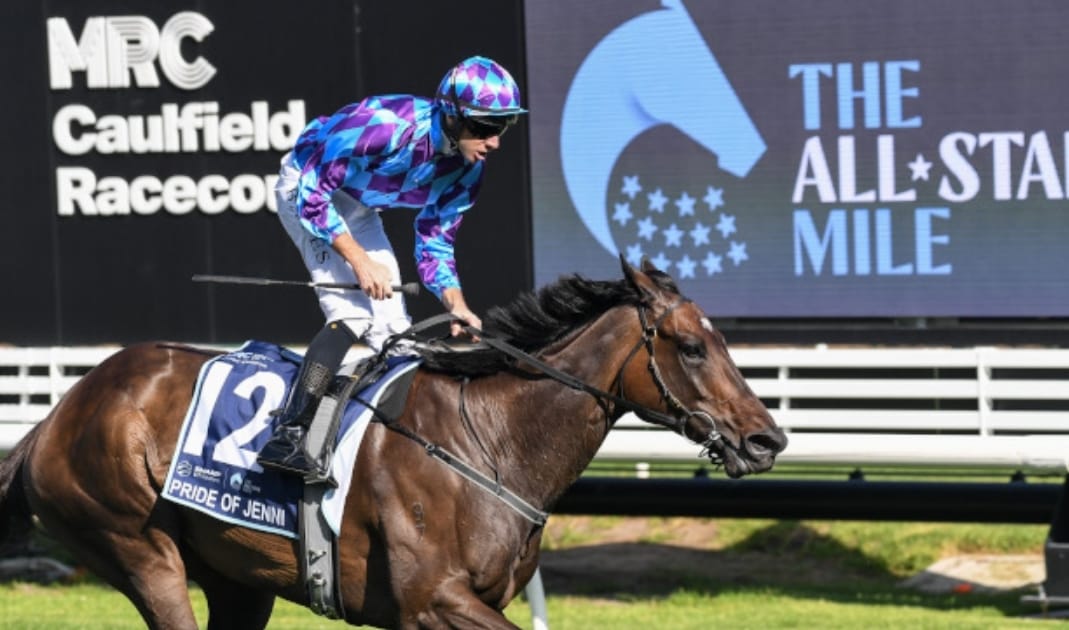
King Snitz is another son of a stallion better known for speed, Snitzel, although his dam Princess Jenni won the Group 1 Australasian Oaks over 2005 metres.
His breeding offers more encouragement for the distance than his sire alone might suggest, while the Caulfield Classic result establishes a recent form reference against other Derby prospects.
Vallice, who finished narrowly behind King Snitz, is also worth considering in that context. A close placing in a lead-up race can become more significant when the horses meet again under different conditions.
Ciaron Maher’s Murshidi brings another form line after winning the Listed Geelong Classic over 2200 metres. The Maurice gelding defeated Icy You and True Tone in what was also his maiden victory.
Unlike the runners progressing from 2000 and 2040 metres, Murshidi has already won over 2200 metres. That doesn’t establish his ability at 2500 metres, but it provides a more recent staying-distance reference.
Murshidi is one you’d have to be keeping an eye on. His Geelong Classic win over 2200 metres gives him a different preparation from several of the leading contenders, and I like that he’s already won over a longer distance. Whether he’s good enough against this opposition is another question.
Skua, runner-up to True Rebel in the Vase, is another contender whose performance deserves consideration rather than being dismissed because he finished behind the favourite.
The Derby presents an opportunity to compare these different preparations under the same conditions. We’ll be interested in how each horse settles, whether it sustains its effort over the final stages and how its performance compares with the established lead-up form.
Coolmore Stud Stakes and Empire Rose Stakes
The Group 1 Coolmore Stud Stakes brings together three-year-old sprinters over Flemington’s straight 1200 metres.
Ciaron Maher’s The Next Episode has an established form advantage over several prospective rivals after winning the Group 2 Danehill Stakes over 1100 metres on 3 October.
He defeated Natural Fling narrowly, with Mbube further back in third. That result provides a direct comparison between two prominent Coolmore contenders.
I wouldn’t be dismissing Natural Fling on her narrow defeat in the Danehill. She was beaten by The Next Episode, but there’s little between them on that performance. Those keen would want to see the final field and how the speed is drawn before separating them.
A Flemington jump-out on 23 October also included The Next Episode, Natural Fling, St Gotthard, Paradoxium and Under Focus, giving their connections further experience on the straight course before Derby Day.
The Group 1 Empire Rose Stakes over 1600 metres features another strong form reference in Lady Shenandoah, who won the Toorak Handicap at Caulfield on 10 October.
The Chris Waller-trained mare carried 58 kilograms in that Group 1 handicap and defeated Changing Colours and Welcometotheshow. Her proven ability at the distance provides a useful starting point when assessing the mares’ contest at Flemington.
Melbourne Cup Day – 3 November
The Melbourne Cup field is beginning to take shape, with third declarations on 26 October reducing the remaining entries to 39 horses competing for places in the 24-runner field.
Ciaron Maher and Joseph O’Brien have particularly strong representation, although their runners are arriving through different preparations and form lines.
Maher’s Juja Kibo secured a ballot exemption with victory in the Group 2 Moonee Valley Gold Cup, run over 2500 metres at Flemington on 24 October.
That followed his win in the Group 2 Metropolitan over 2400 metres at Randwick.
Two consecutive Group 2 victories make Juja Kibo one of the better-performed stayers entering the Cup, but those results have also affected his handicap.
He received a 1.5-kilogram penalty for the Moonee Valley Gold Cup, taking his Melbourne Cup weight to 55 kilograms. Combined with his earlier Metropolitan penalty, he has risen 3.5 kilograms since the original weights were released.
Juja Kibo has done everything right in his last two starts, and I rate his preparation highly. The concern isn’t his current form; it’s whether he can reproduce it over 3200 metres with 55 kilograms. That’s a substantial difference from the races he’s been winning.
Maher also has ballot-exempt runners Point Of Law, Mr Monaco and Shockletz, whose qualifications came through separate spring staying races.
Point Of Law earned his place by winning the Geelong Cup over 2400 metres, while Mr Monaco won the Bart Cummings and Shockletz secured his position through the Archer Stakes.
Joseph O’Brien’s team includes Defiantly, winner of the Prix Kergorlay over 3000 metres, along with Trustyourinstinct, Goodie Two Shoes and James J Braddock.
Defiantly’s established winning form over 3000 metres is particularly relevant to the Melbourne Cup distance. Juja Kibo, by comparison, brings stronger recent Australian Group 2 form but has not established the same staying record over a comparable trip.
International runners must adapt to Australian racing conditions, while locally prepared horses stepping up in distance need to demonstrate they can sustain their efforts over 3200 metres.
The final field and barrier draw, scheduled for Derby Day, will provide further information about the likely race setup.
Assessing the Melbourne Cup Form
The Moonee Valley Gold Cup provides a useful recent comparison, with Juja Kibo defeating Kings Valley and Mr Monaco. King Pedro and Jennivamoose finished further back.
Their respective performances will be relevant if they secure places in the Melbourne Cup, particularly given the increase to 3200 metres and the different handicap conditions.
Juja Kibo’s recent victories have established his current form, while Defiantly brings proven winning form over 3000 metres. Eager to watch how those two preparations compare over the Cup distance.
Following the race, we’ll assess the performances of the beaten runners, including whether any are better suited to future staying assignments over 2400 or 2500 metres.
VRC Oaks Day – 5 November
The Group 1 VRC Oaks over 2500 metres has a prominent contender in David Payne’s Proxima Dea, who extended her unbeaten record to five wins with victory in the Spring Champion Stakes at Randwick on 24 October.
Ridden by Zac Lloyd, Proxima Dea settled outside the leader before defeating Global Goal by one and a half lengths over 2000 metres. Cormier finished third.
The performance demonstrated her ability to sustain a strong effort at Group 1 level, and Payne has indicated that the additional 500 metres of the Oaks should suit her.
Proxima Dea is probably the filly I’m most interested in seeing at Flemington. She’s unbeaten, she’s now a Group 1 winner, and her Spring Champion Stakes performance gives Payne good reason to believe she’ll handle further. I wouldn’t want to assume she’ll stay 2500 metres, but there’s plenty to like about how she’s progressed.
The Group 3 Ethereal Stakes at Caulfield provides a different line of form.
Tony and Calvin McEvoy’s Quick Finish led throughout to win the 2000-metre race on 17 October, defeating Your Colour by half a length, with Refuse To Curtsy finishing third.
Quick Finish has demonstrated that she can maintain her effort after racing prominently. Your Colour, meanwhile, finished close enough to warrant further consideration if she contests the Oaks.
One of the aspects I find interesting when assessing young staying horses is how pedigree compares with what they’re doing on the track.
A filly might be bred to improve over longer distances, but that doesn’t mean she’ll automatically stay 2500 metres. Equally, a horse without an obvious staying pedigree can sometimes produce performances that suggest greater stamina than expected.
Proxima Dea brings the strongest recent Group 1 reference of those discussed here, while Quick Finish and Your Colour have already met over 2000 metres.
The Group 2 Wakeful Stakes on Derby Day will provide another lead-up before the Oaks field is finalised.
With three-year-old fillies, we’re also assessing development. Some may already be physically mature, while others could improve considerably with further racing and another preparation.
A strong Oaks performance can therefore be useful well beyond the immediate result, although progression against older horses or stronger opposition needs to be judged separately.
Champions Stakes Day – 7 November
The final meeting of the Carnival brings together three Group 1 races over 1200, 1600 and 2000 metres.
There are already some important form lines to consider, particularly following the Cox Plate at Flemington on 24 October.
Champions Stakes
Cosmic Crusader’s Cox Plate victory has raised the possibility of another appearance over 2000 metres in the Champions Stakes.
The Andrea Leek-trained runner defeated Birdman and Aeliana in the 2040-metre contest, adding to his earlier Group 1 Turnbull Stakes success.
He had also finished fourth in the Caulfield Cup over 2400 metres the previous week.
That sequence of performances provides a strong recent form profile across middle distances, although connections have not committed him to another start.
A Champions Stakes appearance would be his eighth run of the preparation, with his recovery from the Cox Plate an important consideration.
There is a lot of respect for what Cosmic Crusader has achieved this spring. The Turnbull and Cox Plate victories speak for themselves, but we’d be reluctant to overlook how much racing he’s had. If connections decide to press on, his recovery from those recent runs would be our main consideration.
Sir Delius is expected to continue to the Champions Stakes after finishing sixth in the Cox Plate.
His previous Group 1 form means that result deserves further examination rather than being accepted as a complete measure of his ability.
Birdman and Aeliana have also been mentioned as possible runners. If they take their places, the Cox Plate would provide a recent direct comparison against Cosmic Crusader.
The important distinction will be whether any change in race circumstances is sufficient to alter their relative performances.
Champions Mile
Chris Waller’s Autumn Glow is being prepared for the Champions Mile after winning the Group 1 King Charles III Stakes at Randwick.
She has won 14 of her 15 starts, including five Group 1 races, but has completed her entire racing career at Randwick and Rosehill.
Flemington will therefore be a new assignment.
Autumn Glow’s established ability over 1600 metres is not in question, although the different track configuration and race setup introduce considerations that weren’t present in her previous Sydney performances.
Her preparation for Flemington has included work in the anti-clockwise direction, according to Waller.
Autumn Glow has been exceptional in Sydney, and punters are looking forward to seeing how she handles Flemington. Her class is well established, but she’s yet to race outside Sydney. It will be interesting in how she adapts rather than looking for reasons to oppose her.
Champions Sprint
Godolphin mare Tempted is expected to contest the Champions Sprint after winning The Everest at Randwick.
She will be racing down Flemington’s straight 1200 metres for the first time.
Joliestar is another prospective contender, bringing established straight-course experience to the race.
The Flemington straight can produce different racing patterns from a conventional sprint around a bend. Runners may form separate groups, with the distribution of early speed influencing which section of the track is most favourable.
For Tempted, the race will provide a direct assessment of how her established sprinting ability translates to the straight course.
The same applies when reviewing the beaten runners. Their positions across the track and the pace of their respective groups will need to be considered alongside the finishing margins.
Identifying Spring Carnival Blackbook Runners
Several runners already have form worth monitoring during the Carnival.
True Rebel’s performance in the Victoria Derby will provide a better indication of his stamina over 2500 metres. King Snitz and Murshidi also arrive through different staying preparations, making their Derby performances useful comparisons.
Skua and Vallice are two worth watching closely on Derby Day. They’ve already measured up against True Rebel and King Snitz in their lead-up races, and you wouldn’t be surprised if those form lines prove closer than the market expects. That doesn’t make either a selection, but they’re worth assessing again.
In the VRC Oaks, Proxima Dea’s unbeaten record and recent Group 1 victory make her a leading contender, while Quick Finish and Your Colour bring a separate form line through the Ethereal Stakes.
The Melbourne Cup and Champions Stakes Day should also provide valuable form for horses returning to similar distances later in their preparations.
Our Blackbook selections will be made after reviewing the Carnival results, replays and available sectional times. Each selection will identify the specific performance and the conditions under which we believe the horse is worth following.
When a Blackbook Horse Becomes a Betting Selection
Finding a horse worth following is one part of the assessment. Deciding whether to back it next start is another.
A runner might produce an excellent effort over 1600 metres at Flemington, only to return over 2000 metres against stronger opposition. Another may have been disadvantaged by a particular race pattern but encounter similar circumstances at its next start.
We need to assess the new race on its merits.
Distance, class, barrier, expected tempo, track conditions and the horse’s preparation all contribute to that decision.
Then there’s the price.
An unlucky horse can attract considerable attention after its replay is widely discussed. By the time it races again, the market may already have accounted for the performance.
At Jig Racing, we’re interested in whether the available odds represent value compared with our assessment of the horse’s winning chance.
Suppose we rate a horse as a 20% winning chance. Its fair decimal odds are $5.00.
If bookmakers offer $7.00, there may be value in the price, provided our assessment is sound.
At $3.50, the same horse wouldn’t represent value on those figures.
Its ability hasn’t changed. The price has.
Of course, our assessment can be wrong, and even a selection offering value can lose. That’s why we don’t automatically turn every promising Blackbook runner into a betting recommendation.
Some horses are worth monitoring for several starts before the right opportunity presents itself.
Following the Carnival Form
The four Flemington meetings will provide new form across staying races, three-year-old contests, sprint events and weight-for-age competition.
Our post-Carnival analysis will build on the lead-up form covered here, incorporating official results, race replays and sectional information where available.
The horses that interest us most won’t necessarily be the ones that win. They’ll be the runners whose performances give us a reason to reconsider their prospects when they race again.
You can follow our Australian horse racing tips and analysis, read our Racing Tips Today articles or explore the available Jig Racing packages for ongoing form analysis and selections.
Recent Posts
27 October, 2026
Spring Racing Carnival 2026 Races and Horses to Follow

27 October, 2026
$3 Million Victoria Derby 2026 Latest Updates

25 October, 2026
Sky Racing Tips vs Independent Form Analysis: What’s the Difference?