
A Good Tip Can Still Lose: How to Judge Racing Results Without Chasing Losses
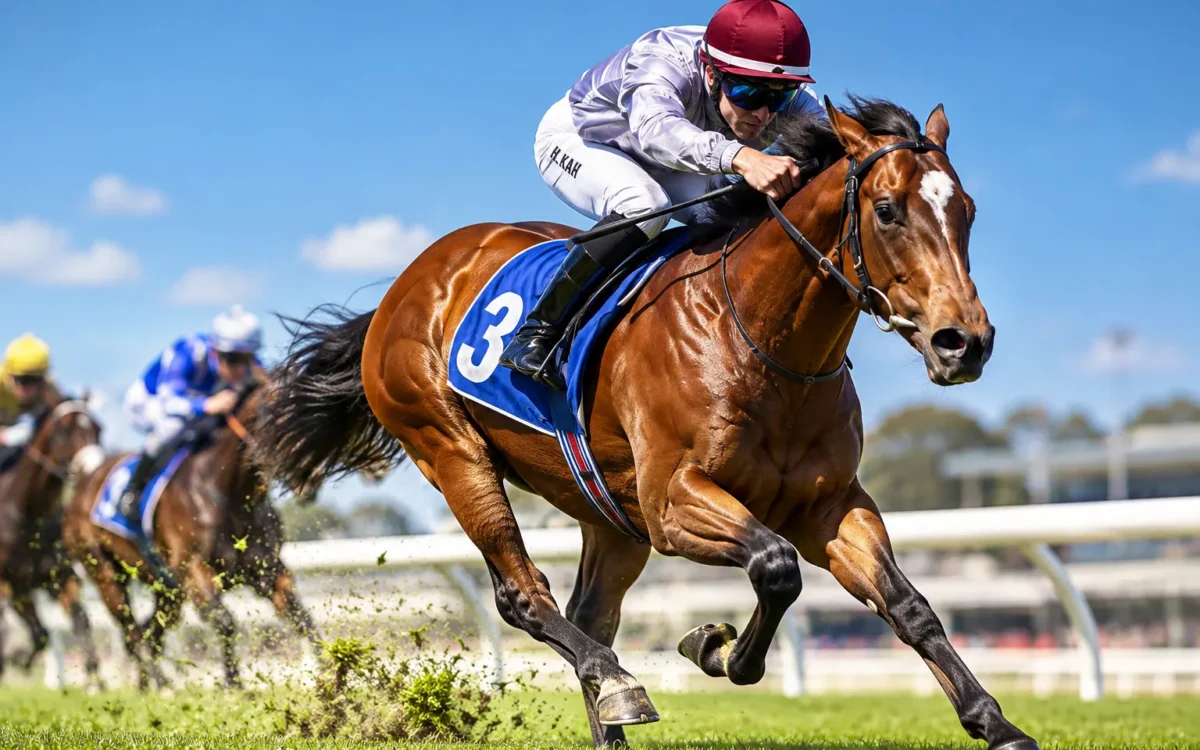
A horse gets beaten. The tip loses. Somebody decides the analysis was rubbish.
That is an easy conclusion to reach when your money has just disappeared. It is also a poor way to judge a racing tipster.
At Jig Racing, we assess betting tips through form, race setup, price and staking. We believe the results need to be examined with the same discipline. A good argument for a horse does not make it certain to win, and a winning selection does not automatically prove the price was worth taking.
Both sides matter.
If you are evaluating racing tipster results, you need to understand what the numbers show, what they leave out and how much uncertainty remains. That means looking beyond one winner, one losing Saturday or a headline strike rate. It also means accepting that disciplined betting can still lose money.
Wagering carries financial risk. It should never be treated as a reliable source of income.
A Winning Tip Can Be a Poor Bet. A Losing Tip Can Be a Sound Decision.
The first myth is that the result tells you everything.
Suppose we assess a horse as having a 30% chance of winning. Decimal odds of $4.00 imply a 25% chance before allowing for bookmaker margin. If our assessment is accurate, that price represents potential value.
The horse can still lose seven times out of ten.
Now consider a horse we assess as a 50% chance. At $1.50, the price implies a 66.7% chance before margin. We may think it is the most likely winner in the race and still consider it a poor bet at that price.
That is the distinction. Our analysis can be sound and the result can go against us. Equally, a poor decision can produce a winner.
There is an important qualification: our probability assessment is an estimate. It can be wrong. A perceived overlay is only genuine value if the underlying assessment is sufficiently accurate. One race cannot establish that.
The Price Changes the Decision
We study trials, jump-outs, replays, likely tempo, barriers, track conditions and the horses themselves. Josh McLoughlin’s bloodstock background also informs our assessment of young and lightly raced horses, particularly where established race form is limited.
That work helps us form an opinion about a runner’s chance.
The market then determines whether the opinion is worth acting on. A horse we liked at $5.00 may be considerably less attractive at $3.00. The form has not necessarily changed. The price has.
We would rather pass than force a bet because we have already spent hours studying the race.
For more on the work behind our selections, read Expert Betting Tips: The Form Factors That Separate Analysis From Guesswork.
Strike Rate Alone Cannot Tell You Whether a Tipster Is Performing Well
A high betting strike rate looks impressive. It is also one of the easiest figures to misunderstand.
Strike rate measures the proportion of selections that win. If a tipster has 25 winners from 100 win bets, the strike rate is 25%.
That tells you how often the selections won. It does not tell you whether following them at the available odds produced a profit.
Consider two hypothetical records, each using one unit per win bet.
| Record | Bets | Winners | Average winning odds | Total returns | Net result | ROI |
| A | 100 | 60 | $1.50 | 90 units | -10 units | -10% |
| B | 100 | 25 | $5.00 | 125 units | +25 units | +25% |
These are illustrative figures, not Jig Racing performance results. They assume every winning bet in each record returns the stated odds and every bet carries the same stake.
Record A wins far more often and still loses money. Record B has a lower strike rate and produces a positive return in the example.
That does not make low-strike-rate betting inherently better. It shows why strike rate needs price and staking context.
ROI Measures the Return on the Amount Staked
Return on investment, or ROI, is commonly calculated as:
ROI = (Total returns − Total stakes) ÷ Total stakes × 100
If a record contains 100 units staked and 110 units returned, the net result is 10 units and ROI is 10%.
A negative ROI means the record lost money over that period.
We want to see the calculation, the number of bets behind it and whether the returns reflect prices a follower could reasonably have obtained. A percentage without those details is incomplete.
It is also worth distinguishing ROI from yield, profit on turnover and other terms a service may use. Reporting conventions can differ. Ask how the figure is calculated before comparing one service with another.
A Short Winning Run Is a Poor Foundation for a Big Conclusion
Another myth is that a few weeks of results reveal the true quality of a betting strategy.
They can reveal something. Usually, less than people think.
Horse racing contains substantial short-term variation. Even a strategy with a genuine positive expected return can experience a losing sequence. A strategy with a negative expected return can enjoy an impressive winning run.
The smaller the sample, the more easily unusual results can dominate the figures.
How Many Bets Are Enough to Judge a Racing Tipster?
There is no universal number that proves a tipster has an edge.
The answer depends on the odds being taken, the variation in returns, the size of the claimed advantage and the consistency of the betting approach. A record dominated by short-priced favourites behaves differently from one containing longer-priced selections.
One hundred bets may provide useful information, but it is rarely enough to establish a small edge with confidence. Several hundred or thousands of bets can provide a clearer picture, although a larger sample still cannot guarantee that past performance will continue.
We would examine the record across different periods rather than rely on one favourable stretch. We would also want to know whether the methodology, staking or selection criteria changed during that time.
A long record is more useful when it is complete and consistently reported.
Losing Runs Are Part of the Mathematics
Suppose a horse has a genuine 30% chance of winning. Its chance of losing is 70%.
The probability of five independent selections, each with that same winning chance, all losing is:
0.7⁵ = 16.8%
That is a simplified example. Actual racing selections are not necessarily independent, and their winning probabilities vary. Still, it demonstrates why losing sequences can occur even when individual selections have reasonable chances.
A losing run does not automatically invalidate an approach. It also does not prove that a turnaround is due.
The next race owes us nothing.
Advised Odds Matter When You Assess Racing Tipster Results
A results record should make clear which prices were used.
If a tip was advised at $5.00 and a follower obtained $3.50, their return will differ substantially from the published result. The same horse can be a worthwhile selection at one price and poor value at another.
This matters when assessing services that publish selections before a race and later report their results.
We would want to know the advised price, the time the selection was released, whether the price was reasonably available and how subsequent market movement is treated in the record.
Starting Price and Advised Price Answer Different Questions
Starting price can help show how the market valued a horse near race time. Advised price shows the price associated with the original recommendation.
Both can be useful. They should not be mixed without explanation.
A service that records every winner at its best available price while ignoring the prices followers could actually obtain may present an unrealistic picture. Conversely, a selection that shortens after release may suggest the market moved towards the original assessment, although that movement alone does not prove the bet was good.
The question is whether the reported record reflects a clear, consistent and reproducible method.
For a broader comparison of analysis, selectivity and transparency, see Best Betting Tips Australia: Compare Racing Analysts.
Unit Staking Gives Results Context. It Does Not Remove Risk.
The next misconception is that a staking system can protect a bankroll from losing.
It can help control the amount risked. It cannot make an unprofitable strategy profitable, eliminate losing runs or guarantee that a bankroll will survive.
At Jig Racing, we use units to give staking recommendations a consistent framework. A unit represents a chosen amount of money, allowing different selections to be recorded and compared without confusing the result with each subscriber’s personal dollar stake.
For example, if a person defines one unit as $10, a one-unit bet is $10. A half-unit bet is $5. The appropriate amount depends on that person’s circumstances, and nobody should stake money they cannot afford to lose.
Why Flat-Stake and Variable-Stake Results Can Differ
A flat-stake record assigns the same stake to every selection. A variable-stake record uses different amounts according to the stated staking approach.
Those records can produce different returns from the same selections.
A tipster might have a positive flat-stake result and a negative variable-stake result if larger bets perform poorly. The reverse can also happen. Neither outcome should be hidden.
We would assess whether the staking method was defined in advance, applied consistently and included in the published results. Retrospectively increasing the stakes on winners creates a misleading record.
A Bigger Stake Does Not Make a Horse More Likely to Win
Confidence and probability are related concepts, but they are not interchangeable.
An analyst can have strong conviction in a selection and still be wrong. A higher-staked bet can lose. A lower-staked bet can win.
We use staking to express the size of a proposed position within a framework. It should never be interpreted as a guarantee or a reason for somebody to exceed their own financial limits.
If a losing run is causing you to increase stakes, abandon your budget or bet money needed for ordinary expenses, the appropriate response is to stop wagering and seek support. A unit system is no substitute for that decision.
Chasing Losses Turns a Bad Result Into a Bigger Financial Risk
A losing bet is frustrating. Chasing it can make the situation considerably worse.
The pattern is familiar. A person loses, increases the next stake to recover the money, then feels greater pressure when that bet also loses. The size of the next wager is now being determined by the previous result rather than the original plan.
That is no longer disciplined staking.
We do not believe a losing sequence creates a reason to bet more aggressively. There is no obligation to recover a loss today, this week or at the next meeting.
The Next Bet Has No Responsibility to Recover the Last One
A horse’s chance of winning is determined by the race and the available information. Your previous betting results do not improve that chance.
The belief that a win is due after a sequence of losses is a gambling fallacy.
Even a genuinely valuable selection can lose. Increasing the stake because you need the result introduces a separate financial risk that the analysis cannot solve.
A betting budget should be set before wagering begins, use money that can be lost without affecting essential expenses, and include clear limits on time and expenditure. If those limits are reached, stop. Do not borrow money, use savings needed for other purposes or increase stakes to recover losses.
Responsible Gambling Comes Before Any Betting Strategy
We provide racing analysis, but we do not regard wagering as a reliable income source. No tipster, staking system or form analyst can guarantee a profit.
The financial scale of wagering in Australia reinforces the importance of maintaining clear limits. Australian Institute of Health and Welfare data shows that wagering losses, including racing and sports betting, totalled $8.4 billion in 2022–23.
If betting is affecting your finances, relationships, work or wellbeing, or you feel unable to stop, support is available. You do not need to wait until the situation becomes severe.
Australian residents can contact the National Gambling Helpline on 1800 858 858 for free, confidential support, 24 hours a day. Gambling Help Online also provides counselling, live chat and self-help resources.
BetStop is the Australian national self-exclusion register. It allows people to exclude themselves from Australian licensed online and phone wagering services for a chosen period, from a minimum of three months up to a lifetime.
If you are concerned about your gambling, taking a break or stopping altogether is a sound decision. There is no racing result worth compromising your financial security.
How We Would Assess a Racing Tipster Before Following Their Selections
A useful results record should allow you to understand what happened without relying on promotional screenshots.
We would look for a complete history of selections, including losing bets, with the advised odds, stake, result and net return recorded consistently. We would then examine the sample size, strike rate, ROI and performance across different periods.
The next question is whether the process behind those results makes sense.
Does the analyst explain the form? Do they account for price? Are they selective? Can they identify races where the available odds do not justify a bet? Is their area of expertise clear?
We would also assess whether the service encourages sensible staking and acknowledges uncertainty. Claims of guaranteed returns, pressure to increase stakes or suggestions that betting can reliably replace employment income should be treated with caution.
Our approach at Jig Racing centres on detailed form study, trial and replay analysis, specialist bloodstock knowledge, selectivity and price assessment. We want subscribers to understand the reasoning behind a selection and the risks involved in acting on it.
That is the standard we believe a racing analysis service should be judged against.
Questions Worth Asking Before You Judge the Next Result
Can a good racing tip lose?
Yes. A sound selection can lose because even a horse with a strong winning chance is not certain to win. We assess the quality of the decision through the available information, estimated probability and price, while recognising that our estimates can be wrong.
Is a high betting strike rate proof of profitability?
No. Strike rate measures how often selections win. Profitability also depends on the odds, stakes and returns. A high strike rate at consistently short prices can produce a loss, while a lower strike rate at larger prices can produce a profit.
How long should I track a tipster before judging their results?
There is no fixed number of bets that proves an edge. A larger, complete record generally provides more useful evidence than a short run, but the required sample depends on the odds, variation and size of the claimed advantage. We would examine multiple periods and the consistency of the reporting method.
Should I increase my stakes after a losing run?
No. A losing sequence does not make the next selection more likely to win. Increasing stakes to recover losses can expose you to greater financial harm. If you feel pressure to chase losses, stop wagering and seek support.
Does unit staking guarantee that my bankroll will last?
No. Units provide a way to structure and record stakes, but they cannot prevent losses or guarantee bankroll survival. The amount risked must remain within your personal financial limits, and stopping is appropriate if wagering is causing harm.
What should I check in a racing tipster’s results record?
Look for all selections, advised odds, stakes, returns, strike rate, ROI and a clear explanation of how the figures are calculated. Check whether the prices were reasonably available and whether the record includes losing periods. A complete record is more useful than selected winning screenshots.
Can I rely on betting tips to earn regular income?
No. Horse racing outcomes are uncertain, and even a well-researched strategy can lose money over short or extended periods. We do not recommend treating wagering as a dependable income source or using money required for living expenses.
Judge the Process, Respect the Risk
One result cannot tell you whether an analyst has a worthwhile approach. A meaningful assessment needs a complete record, realistic odds, consistent staking and enough observations to put short-term variation into context.
We also have to accept the limits of that assessment. Historical profit does not guarantee future profit. A sound decision can lose. A strategy that appears promising can turn out to have no genuine edge.
At Jig Racing, we believe the work behind a selection should be open to scrutiny. Our focus is on form, trials, replays, race setup, price and disciplined decision-making. We are prepared to leave a race alone when the value is not there.
If you are considering a racing analysis subscription, review our Packages and decide whether our approach suits you. There is no need to bet on every race, and there is no reason to wager beyond your means.
Recent Posts
25 September, 2026
Why Strong Horse Racing Form Can Still Be a Bad Bet
21 September, 2026
Betting Tips: How to Tell a Form Based Opinion From a Guess