
Why Unit Staking Protects Your Betting Bankroll
Most punters do not lose their bankroll because they cannot pick a winner.
They lose it because they cannot size a bet.
Race analysis, form, value and market movement all matter. But even good selections can produce poor results when stakes change according to confidence, frustration or recent performance.
A strong opinion does not protect your bankroll. A staking plan can help you control how much damage any one decision causes.
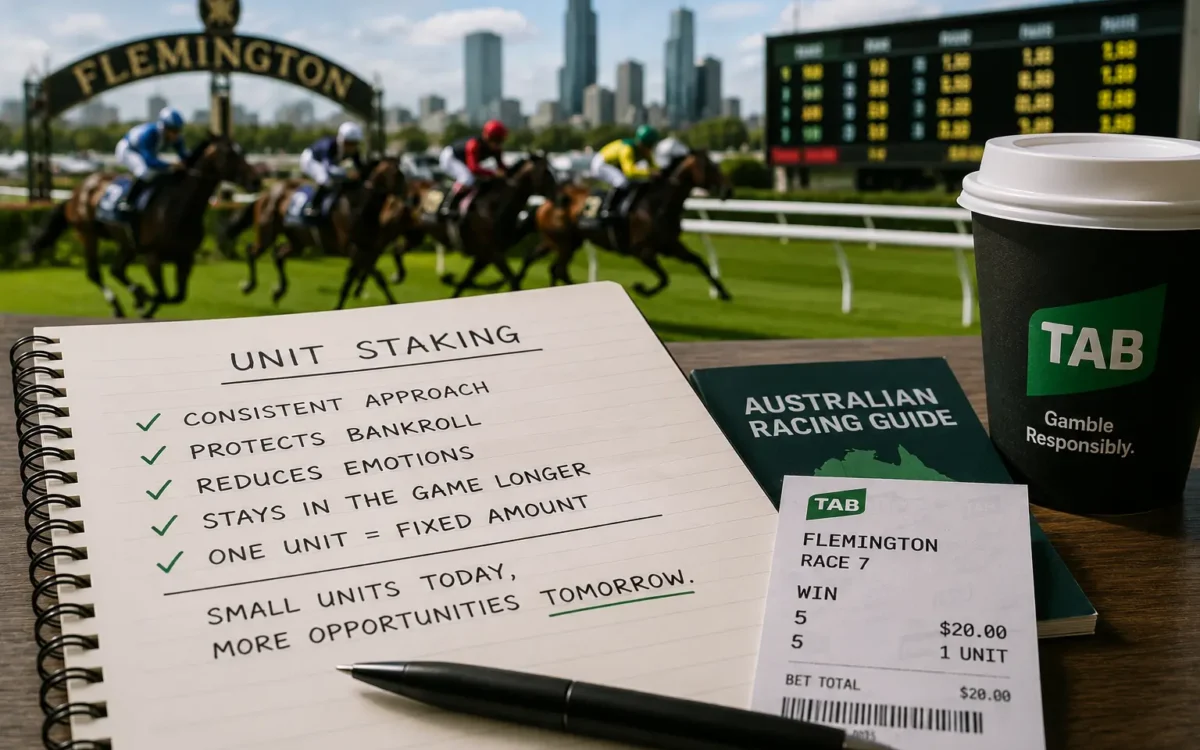
That does not mean unit staking guarantees a profit. It does not. It gives you a consistent way to manage risk, absorb losing runs and make decisions without letting emotion determine your exposure.
Confidence Is Not a Staking Strategy
Punters often treat confidence as evidence.
They like a horse more than usual, so they increase the stake. After several losses, they bet bigger to recover the money. Following a strong day, they raise their stakes because they feel they are reading the market well.
None of those decisions necessarily reflects a genuine edge.
Confidence can come from careful analysis, but it can also come from recency bias, frustration, ego or one impressive replay. Your bankroll cannot distinguish between justified confidence and misplaced conviction. It only responds to the amount you risk.
This is why conviction and stake size should not be treated as the same thing.
A strong opinion may justify a larger bet within a predefined range. It should never become permission to ignore the plan.
Without a staking framework, confidence often becomes an excuse for inconsistent decisions. One bet is small, the next is oversized and the next is an attempt to recover a previous loss.
That inconsistency increases volatility and makes it harder to judge whether the underlying betting strategy is working.
What Is a Unit Staking Plan?
A unit staking plan uses a standard measurement to size bets.
Rather than choosing a random cash amount for every selection, you define the value of one unit and stake within an agreed range.
For example, a bettor with a £1,000 bankroll might decide that:
- 0.5 units equals £5
- 1 unit equals £10
- 2 units equals £20
- The maximum stake on one bet is 2 units
In this example, one unit represents 1% of the total bankroll.
The percentages and limits are illustrative rather than universal. The right structure depends on your financial circumstances, risk tolerance and betting approach. The important point is that the rules are decided before emotion enters the decision.
A unit plan separates two questions:
- Is this a worthwhile bet?
- How much exposure should it receive?
Many punters answer both questions with the same feeling. They like the horse, so they bet heavily.
A structured bettor assesses the opportunity first, then applies a stake that fits the plan.
How Unit Staking Protects a Bankroll
A staking plan cannot remove risk, but it can limit the effect of poor decisions and unpredictable results.
It limits the damage from one result
Losing bets are unavoidable. Even a well researched selection can be beaten by a poor start, a difficult draw, traffic, weather, track conditions or simple variance.
When stakes remain within a controlled range, one result should not cause serious damage to the overall bankroll.
An oversized bet creates the opposite problem. It allows one outcome to carry far more importance than the underlying strategy may justify.
It helps you survive losing runs
A genuine betting edge does not produce a smooth sequence of wins.
Profitable strategies can still experience long losing periods. If stakes are too large, the bankroll may not survive long enough for the quality of the selections to become clear.
Unit staking gives the strategy more room to operate. It does not make the selections better, reduces the chance that a short run of poor results will destroy the bankroll.
It reduces emotional decisions
Chasing losses is rarely an analytical decision. It usually begins with frustration.
Australian Institute of Family Studies research found that 24% of regular race bettors had tried to win back money they had lost on another day. This behaviour can increase financial exposure because the size of the next bet is being influenced by an earlier result rather than the merits of the new selection.
A punter loses two bets, increases the stake on the third and tells themselves the next race is a stronger opportunity. The real motivation is often to recover the previous losses.
A predefined staking range creates friction between the feeling and the action. The bettor must either follow the rules or consciously break them.
That pause can prevent a difficult afternoon from becoming a much larger financial loss.
It makes performance easier to evaluate
Random stakes make betting records harder to interpret.
A punter might select winners at a reasonable rate but still lose because the largest stakes were placed on the weakest bets. They may then blame the selections rather than the inconsistent exposure.
Recording results in units provides a clearer view of performance. It helps separate selection quality from the size of the bankroll or the amount staked in cash.
Why Good Tips Cannot Fix Bad Staking
Better selections will not rescue an undisciplined staking process.
A punter can follow sound analysis and still lose heavily by changing stakes according to mood, hype or recent results. Good information used through a reckless staking approach can still produce poor outcomes.
This matters when following a racing tipping service.
The service can provide selections, prices and analysis. The punter still controls the stake. If that stake is doubled after a loss or increased because a particular race feels exciting, the original strategy is no longer being followed consistently.
The more useful question is not simply:
Do I like this horse?
It is:
How much risk does this bet deserve within my plan?
That distinction helps turn betting advice into a repeatable process rather than a series of emotional decisions.
How to Set a Betting Unit
A unit plan does not need to be complicated.
It needs to be clear enough to follow when results are going against you.
1. Set a separate bankroll
Choose an amount you can afford to lose without affecting essential expenses, savings or financial commitments.
Do not include money that you expect to replace later. The bankroll should be a defined and separate amount.
2. Decide the value of one unit
Some bettors use a small percentage of the bankroll, such as 1%, as one unit.
Using the earlier example:
- Total bankroll: £1,000
- One unit: £10
- Half a unit: £5
- Two units: £20
A more conservative bettor may choose a lower percentage. The purpose is not to find the most aggressive stake possible. It is to create a sustainable level of exposure.
3. Set a maximum stake
Decide the largest number of units you will risk on one selection.
A narrow range is usually easier to manage than a scale that runs from 0.5 to 10 units. Large ranges can allow confidence to create major differences in exposure.
For example:
- 0.5 units: small speculative position
- 1 unit: standard bet
- 1.5 units: stronger position
- 2 units: maximum position
A 2 unit bet should still represent controlled exposure, not a declaration that the selection cannot lose.
4. Set an overall exposure limit
Individual stakes are only part of the risk.
Five simultaneous 2 unit bets create 10 units of open exposure. A bettor should therefore consider both the size of each bet and the total amount at risk across a meeting or day.
A daily or meeting level limit can prevent several individually reasonable stakes from becoming excessive when combined.
5. Decide when to recalculate the unit
Avoid changing the cash value of a unit after every result.
Frequent adjustments can turn the plan into another emotional system. A clearer approach is to review the bankroll at fixed intervals, such as monthly or after a significant and sustained change.
The review rule should be decided in advance.
6. Record every bet
Track:
- date and race
- selection
- odds taken
- stake in units
- cash stake
- result
- profit or loss
- reason for the bet
Records make it easier to identify whether the problem lies with selection quality, price assessment, staking discipline or all three.
Common Staking Mistakes
Increasing stakes after a loss
A previous result does not improve the next selection.
Increasing the stake to recover money usually adds risk at the point when judgement is most vulnerable.
Betting more because you feel due
Being “due” is not evidence.
A losing sequence does not mean the next bet is more likely to win unless new information changes the assessment of that specific race.
Treating every strong opinion as a maximum bet
Not every confident view deserves maximum exposure.
Confidence should operate inside the staking range, not override it.
Increasing stakes after a good day
Winning can damage discipline as easily as losing.
A successful afternoon may create overconfidence and encourage bigger bets that were never part of the original plan.
Using a unit size you cannot sustain
A unit is too large when normal losing runs create financial pressure or tempt you to abandon the strategy.
The right unit size should allow you to follow the plan without needing favourable short term results.
Unit Staking FAQs
What is a unit in betting?
A unit is a standard measurement used to size bets. It allows stakes and results to be recorded consistently, regardless of the cash value of the bankroll.
How do I calculate one betting unit?
Some bettors calculate one unit as a small percentage of their total bankroll. For example, 1% of a £1,000 bankroll is £10. This is only an illustration, and a lower percentage may be more suitable depending on personal circumstances.
How many units should I risk on one bet?
There is no universal number. The important point is to set a limited range and a maximum stake before betting. No single wager should be large enough to cause serious financial damage.
When should I change the value of a unit?
Review it at a predefined interval or after a significant, sustained change in the bankroll. Avoid increasing the value simply because you have won several bets or feel more confident.
Can a staking plan prevent betting losses?
No. A staking plan cannot make losing selections profitable or eliminate variance. It can help control exposure and reduce the damage caused by inconsistent or emotional staking.
Is bankroll management more important than picking winners?
Both matter. A staking plan cannot repair poor selections, but poor staking can quickly undermine good ones. Selection quality, price, discipline and risk management must work together.
How can I use units with a tipping service?
Record each recommended stake in units and apply it within your own financial limits. Do not increase the exposure because you want to recover a previous loss or feel unusually confident about one selection.
Bet With a Process, Not Emotion
A unit staking plan cannot guarantee a profit or prevent losing runs. It can help limit the damage caused by impulsive decisions.
Set a separate bankroll. Define the value of one unit. Establish a maximum stake and total exposure limit before you place a bet.
Most importantly, do not rewrite the rules because you have lost, won or developed a strong feeling about the next race.
Good selections still need disciplined execution.
Read Jig Racing guide to thoroughbred racing analysis, view today’s racing tips or start a free trial to see how a structured approach works in practice.
Only bet what you can afford to lose. Gambling should not be used to solve financial problems. Stop and seek support if betting is affecting your finances, relationships or wellbeing.
Recent Posts

21 August, 2026
Piranha Media 20/8/26