
More Horse Racing Tips Won’t Fix a Weak Betting Process
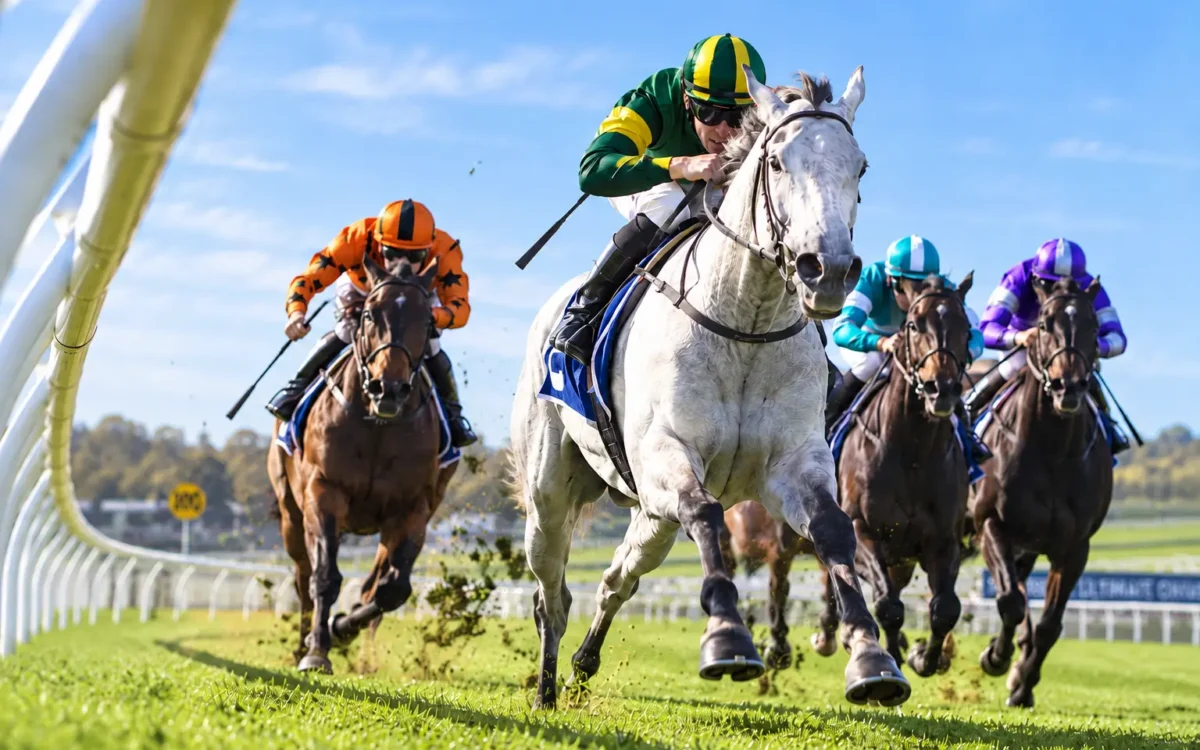
You can collect horse racing tips from five different sources before the first race on a Saturday. By lunchtime, you may have a dozen horses to follow, several conflicting opinions and no clear idea which selections deserve your money.
More information can make a betting decision harder when you have no process for sorting through it.
A horse name tells you very little on its own. We want to know what the horse has shown, how the upcoming race is likely to unfold, whether the conditions suit and what price is available. Those questions give us something meaningful to assess before we consider a bet.
At Jig Racing, we spend our time studying form, trials, jump-outs and race replays because the reasoning has to come before the selection. Josh McLoughlan’s bloodstock background adds another perspective, particularly around young and lightly raced horses. That work gives us a basis for forming an opinion. It does not make every opinion correct.
A sound process can still produce a losing bet. A poor decision can still find a winner. We want to understand the difference.
We Want a Reason for Every Race Tip Before We Consider the Bet
A useful racing tip should give you enough information to understand the selection. We want to know what the horse has done, what it is being asked to do next and which parts of the race could work against it.
Start with the evidence. Has the horse shown the ability required for this class and distance? Was its previous run stronger than the finishing position suggests? Does the likely tempo suit its racing pattern? Have the conditions, weight or opposition changed?
Then comes the price.
A selection can survive those questions and still be a pass. The available odds may already reflect everything we like about the horse. There is no requirement to bet simply because we have formed an opinion.
That is the standard we want our race tips to meet. The reasoning should be clear enough for a punter to assess it, even if they ultimately disagree.
A Horse Can Be the Most Likely Winner and Still Be the Wrong Bet
Suppose we rate a horse as the strongest winning chance in a race. That does not settle the betting decision.
If the market has the horse at a price shorter than our assessment justifies, we may have no interest in backing it. Another runner could have a lower chance of winning but offer a more attractive price relative to that chance.
The favourite may win anyway. That is racing.
The important distinction is between the horse we think is most likely to win and the horse, if any, whose available odds justify the risk.
The Race Map Tells Us Whether the Form Has a Chance to Hold Up
We can like a horse’s previous performance and still dislike the race it has drawn.
A race map is our assessment of how the field is likely to settle and how the tempo may develop. We consider which horses can lead, which runners are likely to press forward, who needs cover and whether a backmarker will get the pace required to bring its best finish into play.
Take a hypothetical backmarker with strong closing form. Its previous run may look excellent on paper. If the upcoming race has very little early speed, the leaders may conserve energy and turn the contest into a sprint home. The backmarker then has a harder task.
The same horse. A different setup.
Barriers also need context. An inside draw can save ground, but it may leave a horse needing luck if it settles behind slower runners. A wide draw can be costly around a tight circuit, particularly if the horse has to work early to find a position. On another track, with a different tempo, the disadvantage may be less significant.
We assess the likely run before deciding how much weight to place on the exposed form. A strong rating matters, but we also need to understand how the horse can reproduce it.
We Watch the Run Before We Trust the Result
The form guide records what happened. The replay can help us understand how it happened.
A horse finishing sixth may have been held up at a crucial stage, covered additional ground or been forced to make its run against the race shape. Another horse may have enjoyed a favourable position and had every opportunity.
We want to separate those performances before treating the finishing positions as a reliable measure of ability.
That does not mean every unlucky horse deserves to be followed. Some runners repeatedly find trouble because of their racing pattern. Others may have had a genuine excuse but face the same problem at their next start.
Our Blackbook work is built around keeping useful observations on the radar. A horse might show something in a replay or trial that makes it worth watching again. What matters is whether a suitable opportunity follows.
Trials and Jump-Outs Give Us Clues Before the Race Record Does
Young horses often have limited exposed form. That makes trials and jump-outs particularly useful when we are assessing two-year-olds, three-year-olds and lightly raced maidens.
We look at how a horse travels, whether it settles, how it responds when asked and how much pressure was required to produce its performance. A trial winner may have been ridden out to achieve the result. A horse finishing behind it may have travelled comfortably and had more to offer.
The finishing order is only part of the evidence.
Josh’s bloodstock experience adds another layer to our juvenile analysis. Pedigree can provide clues about likely distance suitability, maturity and the type of conditions a horse may handle. We then look for evidence that the horse is developing in a way that supports those expectations.
Breeding does not guarantee ability. A strong trial does not guarantee a race-day performance. We use those clues alongside the rest of the form and the upcoming race setup.
For a deeper explanation of the factors we assess, see our article, Expert Betting Tips: The Form Factors That Separate Analysis From Guesswork.
Track Conditions Can Change the Bet We Thought We Had
A horse’s previous form belongs to the conditions under which it was produced. The next race may ask a different question.
We assess the going, distance, weight, weather and the way the track is racing. A horse that has performed well on Good ground may face a different test on a Soft or Heavy surface. Another runner may have previous wet-track form that becomes more relevant as conditions deteriorate.
We still need to examine the circumstances behind those results. A strong wet-track record may include races where the horse enjoyed an ideal tempo or an uncontested lead. A poor record may contain runs where other factors made the task difficult.
The track pattern can also develop during a meeting. Earlier races may suggest that certain positions or parts of the track are performing better than others. We consider that evidence alongside the original map and the horse’s preferred racing pattern.
A morning selection should remain open to reassessment. If the conditions change enough to alter the horse’s chance, the betting decision may need to change as well.
The same applies to distance, weight and opposition. A horse dropping in class may face a more suitable assignment, while a runner stepping up in distance may need to show that its previous performance can translate. We assess the whole race rather than relying on one favourable statistic.
We Need the Price to Agree With the Work
Once we have assessed the horse and the race, we need to decide whether the available odds justify a bet.
An overlay exists when our estimated winning chance is greater than the probability implied by the bookmaker’s price. The assessment is our opinion, informed by the available evidence. It is not a known fact.
Consider a hypothetical horse we estimate has a 25% chance of winning. That equates to fair decimal odds of $4.00 before allowing for any margin or uncertainty.
| Available decimal odds | Implied winning probability | What it means if our 25% estimate is correct |
| $3.00 | 33.3% | The price is shorter than our assessed fair odds. |
| $4.00 | 25.0% | The price matches our assessed fair odds before margin and uncertainty. |
| $5.00 | 20.0% | The price may represent value according to our assessment. |
Illustrative example only. Implied probability is calculated as 1 ÷ decimal odds. The figures do not establish any real horse’s winning chance.
The calculation is straightforward. Estimating the chance accurately is the difficult part.
We can get that estimate wrong. A horse may encounter interference, fail to reproduce its form or simply be beaten by a better performance. Value betting does not remove those risks or guarantee a profit.
A Short Price Can Be Fair. A Bigger Price Can Still Be Poor Value.
We do not automatically oppose favourites or look for outsiders.
A short-priced horse may deserve its market position if the form, map and conditions support a strong winning chance. A bigger-priced runner may offer little value if its chance is weaker than the odds suggest.
The question is whether the price gives us enough room for the uncertainty in our assessment.
That is also why a market move matters. A selection released at one price may become less attractive after the odds shorten. We need to assess the price available now rather than assume the original opinion remains a bet at any odds.
No Edge Means We Leave the Race Alone
In those situations, passing is part of the process.
Forcing a bet because another race is about to start does not improve the analysis. Neither does increasing stakes after a loss or betting simply to stay involved.
Betting amounts can accumulate quickly when discipline slips. Australian Institute of Family Studies research found that people who participated in race betting spent an average of $93 on a typical gambling day, with a median of $20. This provides another reason to set clear limits and be willing to pass when the analysis does not identify a worthwhile opportunity.
We prefer a defined bankroll and a staking plan that limits the amount exposed to any one selection. A unit-based approach can help keep stakes consistent with the available funds and level of risk being taken, but it cannot prevent losing runs or guarantee profit.
The discipline is in following the limits, including knowing when not to bet.
If betting is becoming difficult to control, stop and seek support. More racing analysis will not solve a gambling problem.
A Better Process Gives Us Something to Review After the Race
A betting record becomes more useful when it includes the reasoning behind each decision.
We want to know what we expected before the race, the price available, the factors that supported the selection and the main risks we identified. After the race, we can compare those expectations with what actually happened.
Did the horse settle where we expected? Was the tempo different? Did the track pattern affect the run? Was our assessment of the horse’s ability too generous? Did we take a price that made sense at the time?
Those questions can reveal mistakes that a simple win-loss record may hide. A review should also consider whether the original information was reliable and whether we gave enough weight to the risks identified before the race.
We Judge the Decision Separately From the Result
Suppose a horse maps well, handles the conditions and is available at a price we believe is generous. It then misses the start and finishes unplaced.
The loss is real. We still need to assess whether the original reasoning was sound and whether the missed start was a risk we should have allowed for.
Now consider a horse we backed without properly assessing the race. It wins after receiving an ideal run. The result does not prove that our process was good.
We want to learn from both situations. Over a meaningful record, we can examine whether our estimated chances were realistic, whether the prices we accepted were appropriate and whether certain types of races consistently cause problems.
A few results will not tell us enough. We need accurate records and a willingness to change an assessment when the evidence demands it.
Our Race Previews Put the Selection Back Into Context
You can do your own form. The question is how much time you have to spend watching trials, reviewing previous runs and following horses from one start to the next.
Jig Racing brings that work together through race previews, Tips and Best Bets, Blackbook runners, Late Mail Alerts and voice and text analysis. We also publish weekly podcasts.
Trials, jump-outs and replays can provide useful clues before a young or lightly raced horse has built a substantial race record. We then assess whether the upcoming race, conditions and available price make it worth considering.
The Blackbook helps us carry those observations forward. A horse may show ability in a trial or produce a run worth following, but that does not make its next start an automatic bet.
Our previews aim to explain the reasoning behind a selection and the factors that could affect its chance. You can use that analysis to form your own view, including whether the available odds justify a bet.
For punters who want access to the research without reproducing the full workload themselves, you can compare our current packages and decide whether the service suits the way you follow racing.
You remain responsible for your own betting decisions. Our analysis cannot remove uncertainty or guarantee a return.
The Questions Worth Asking Before You Follow Another Tip
How do we tell whether a racing tip has genuine analysis behind it?
We look for reasoning that explains the horse’s relevant form, likely race setup, conditions and available price. A useful tip should also acknowledge the main risks rather than present the selection as certain.
Do we need to watch every race replay to make better betting decisions?
No. We prioritise replays relevant to the horses and races we are assessing, particularly where interference, tempo, positioning or unsuitable conditions may have affected the result.
Can a horse be a good selection if it lost its previous race?
Yes. A beaten horse may have produced a stronger performance than the finishing position suggests, particularly if it was held up, caught wide or disadvantaged by the race shape. The next race and available price still need to make sense.
Are favourites safer bets than horses at bigger odds?
A favourite generally has a higher market-implied chance of winning than an outsider, but that does not make it a safe bet. We assess whether the price fairly reflects the horse’s chance.
What should we do when the odds shorten after a tip is released?
We reassess the price. A selection that appealed at the original odds may offer less value after a significant market move.
How many race tips should we follow in a day?
There is no required number. We would rather assess the quality of the opportunities than set a target for how many selections to follow. Your bankroll limits and financial circumstances should also determine whether betting is appropriate.
Can a disciplined betting process guarantee long-term profit?
No. Racing involves uncertainty. A structured process and sensible bankroll limits can support more consistent decisions, but they cannot guarantee profitability or eliminate financial loss.
Follow the Work. Keep Control of the Bet.
More horse racing tips will not automatically improve your betting decisions. We want every selection to have a reason, a suitable race setup and a price that makes sense.
The process starts with the horse’s form. We then assess the likely map, review the relevant performances, consider the conditions and compare our estimated chance with the market. If the evidence is insufficient or the price is wrong, we can pass.
That is a decision in its own right.
If you want to understand the analysis in greater detail, our article on Expert Betting Tips and the Form Factors That Separate Analysis From Guesswork takes the next step into the technical work behind a racing opinion.
If you would rather access our race previews, Best Bets, Blackbook and Late Mail, have a look at our packages and see whether the service fits how you bet.
We do the form work. You keep control of the decision.
Betting carries financial risk. Only bet with money you can afford to lose. If gambling is causing concern for you or someone you know, seek support through Gambling Help Online or another appropriate Australian gambling-help service.
Recent Posts
14 September, 2026
Sky Racing Tips: What to Look for Beyond the Broadcast Selections