
The Run to Follow: How Trials and Replays Reveal What the Form Guide Misses
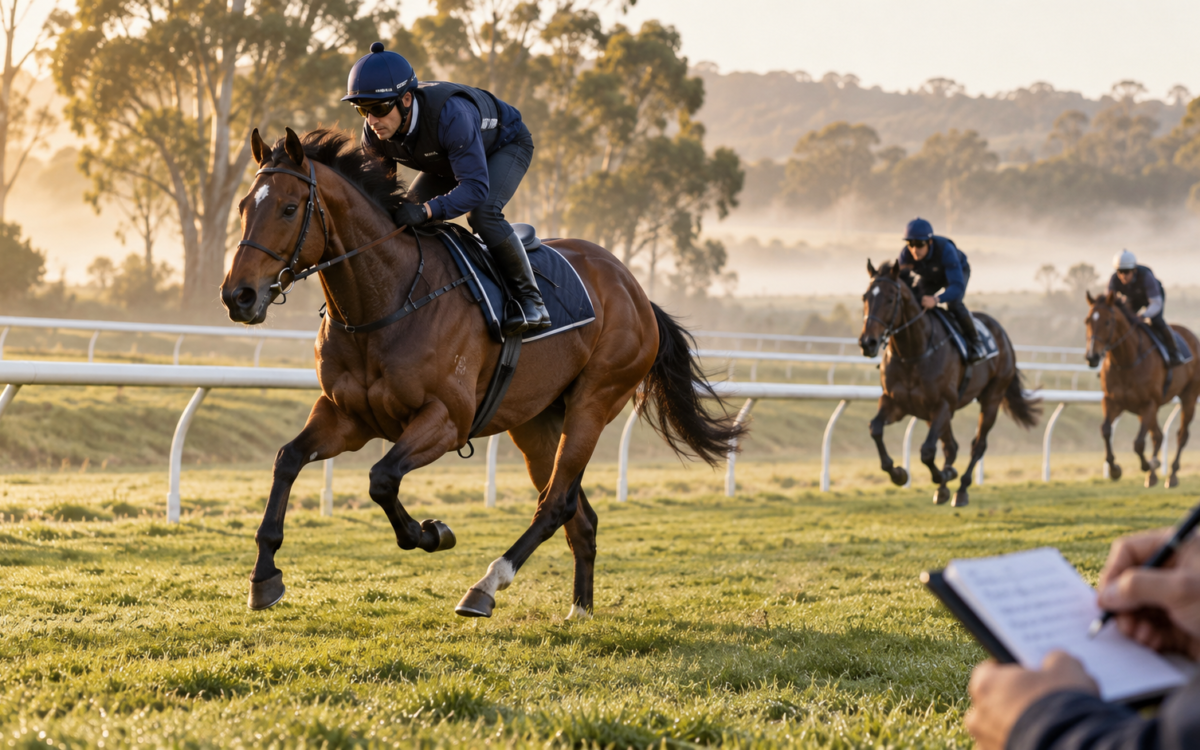
Horse racing trial tips aren’t about finding whichever horse won its latest trial by the biggest margin. At Jig Racing, we’re more interested in what the horse actually showed us, how it achieved the performance and whether there’s something worth following when it gets to the races.
A horse can finish fifth and still be the most interesting runner in the field.
Look at the form guide and you might dismiss it. Watch the replay and the story can be completely different.
Maybe the horse never saw daylight until the race was over. Maybe it was trapped three wide without cover or was still learning what racing was about.
Then you go back through its trials and discover it had been moving well before making its debut.
Now we’ve got something worth investigating.
This is the work we do at Jig Racing.
We study barrier trials, jump-outs and race replays to identify performances that deserve more attention than the bare results suggest.
We also consider pedigree, particularly with two- and three-year-olds that haven’t had enough starts to establish what they’re capable of.
We’re not trying to declare every impressive young horse a future winner.
We want to identify those worth remembering, follow their development and assess whether their next race presents a genuine opportunity.
That’s where our Blackbook comes in.
The Form Guide Gives You the Result. We Want to Know What Actually Happened.
A form guide provides useful information.
Finishing positions, beaten margins, distances, track conditions, barriers and previous results all matter.
But those details don’t always explain how the race unfolded.
That’s particularly important when we’re assessing young horses with limited racing experience.
A runner might finish fourth in a maiden, beaten three lengths, and get overlooked because the first three horses appear to have performed better.
Watch the replay and you might find the fourth horse had a considerably harder run.
It could have been caught wide, inconvenienced at a crucial stage or forced to settle further back than intended.
Those circumstances can change how we assess its next start.
We want to understand what the horse actually did, not simply where it finished.
Why Young Horses Can Have More Ability Than Their Results Suggest
Two- and three-year-olds are still developing.
Some are naturally precocious. They’ve got the speed and maturity to perform well early.
Others need time, racing experience or a more suitable distance before showing their ability.
Josh’s bloodstock background gives us another perspective when assessing these horses.
We consider what their breeding suggests, how they’ve performed in trials and whether their race-day efforts are consistent with their stage of development.
A young horse might struggle to settle on debut.
Another could be uncomfortable racing among other runners or fail to respond immediately when the jockey asks for an effort.
That doesn’t automatically excuse a poor performance.
But it gives us a reason to examine the run more closely.
We’re trying to establish whether the horse lacks ability or simply hasn’t had a proper opportunity to demonstrate it.
A Bad Result Isn’t Always a Bad Run
There’s a difference between a horse having genuine bad luck and one simply not being good enough.
Punters can become very generous with excuses when they’ve backed something.
Every beaten favourite was unlucky. Every backmarker needed another 100 metres. Every horse held up in the straight was supposedly going to win.
Not for us.
We want evidence that the interference or race circumstances materially affected the performance.
Did the horse have momentum when it was checked?
Was it travelling well enough to improve its position?
What happened once it found clear running?
And how much ground could it realistically have made up?
A horse finishing strongly after the race was effectively over might deserve another look.
But if it was already beaten before encountering interference, we’re not upgrading the performance simply because it found trouble late.
We need to separate genuine hidden form from wishful thinking.
We Watch the Trials Because the Real Clues Often Appear Before Race Day
Much of our analysis begins before a horse has an official race record.
Barrier trials and jump-outs can provide an early look at ability, racing manners and physical development.
They’re particularly useful in juvenile racing and maidens, where runners often have limited exposed form.
But here’s the trap.
The horse that wins a trial isn’t necessarily the one we want to follow.
Sometimes the most interesting runner finishes second, third or further back.
We want to know how it performed and what the effort tells us about its ability.
What We Look for in Barrier Trials and Jump-Outs
When we’re reviewing a trial, we’re watching the entire performance, not just the final 100 metres.
How did the horse begin? Did it show natural speed, or was the rider asking it to muster?
Did it settle comfortably?
How did it travel when another horse applied pressure?
And what happened when the rider asked it to quicken?
Those observations can tell us considerably more than the finishing position.
Natural speed and acceleration
Some young horses show speed without being pushed along.
Others take time to build momentum before finishing strongly.
We want to understand how naturally a horse produces its speed and whether that ability is likely to be useful in an upcoming race.
A runner with natural early speed might be suited to a different race setup from one that needs time to settle and build momentum.
Neither racing pattern is automatically better. What matters is how the horse’s ability fits the next assignment.
Travelling ability and racing manners
A horse that settles comfortably and travels strongly can leave a different impression from one that fights the rider throughout.
We also watch how inexperienced horses respond to racing among other runners.
Do they settle when asked?
Are they comfortable racing behind horses?
Can they maintain their rhythm when the pressure increases?
These observations help us understand where a young horse is in its development.
The amount of effort required
This is one of the details we pay particular attention to.
A horse that wins under heavy riding has produced a different performance from one that finishes alongside it without being fully extended.
But we don’t automatically upgrade the second horse.
We still need to consider the conditions, opposition and what the riders were trying to achieve.
Trials are part of a horse’s preparation. They’re not always competitive attempts to produce the fastest possible time.
A quiet trial can provide useful information, but it doesn’t prove the horse has more ability than the runners around it.
The quality of the opposition
An impressive performance means more when we understand the horses involved.
Was the runner competing against experienced horses or other unraced youngsters?
Were its opponents asked for an effort?
How does the performance compare with its previous work?
An eye-catching trial against limited opposition needs to be assessed differently from a similar performance against stronger, more experienced runners.
The same principles apply to jump-out analysis, although the purpose and circumstances of individual sessions can vary.
Jump-outs can reveal useful information about movement, speed, racing manners and preparation.
But neither an impressive trial nor a jump-out tells us everything.
We want to know whether the evidence holds up when the horse gets to the races.
The Run We Remember Isn’t Always the Horse That Won
Here’s where replay analysis gets interesting.
Imagine a maiden where the winner enjoys a perfect run behind the leader, gets clear at the right time and finishes strongly.
A good performance.
But further back, another runner spends much of the straight looking for somewhere to go.
By the time it gets clear, the race is effectively over.
The form guide records the finishing positions and beaten margins.
We’re more interested in whether the beaten horse showed enough ability to deserve closer attention next start.
That doesn’t mean we’re automatically putting it in the Blackbook.
First, we need to examine what actually happened.
Finding Hidden Merit in Unlucky Runs and Strong Finishes
When we study race replays, we’re looking for performances that might have been better than the official result suggests.
A horse caught wide without cover may have travelled additional ground.
Another might have been checked or forced to change course at a crucial stage.
A backmarker may have found the tempo completely unsuitable.
Those circumstances can help explain why a runner finished where it did.
But the overall performance still needs to stand up.
Sectional times are useful here.
If a horse produces a strong closing sectional, we want to know how the earlier stages of the race unfolded.
A runner sprinting home after a slow first half has done something different from one producing a sustained finish after a demanding tempo.
The numbers need context.
So does the replay.
Was the horse making meaningful ground?
Was it simply passing tiring runners?
Did the performance suggest it could be more competitive under different circumstances?
These are the details that help us judge whether an ordinary result contains something worth following.
When an Excuse Is Genuine, and When Punters Are Making One Up
Not every unlucky horse deserves another chance at the next start.
A runner might encounter interference while already struggling to hold its position.
Another might be held up briefly but still have every opportunity to finish strongly once clear.
If the horse doesn’t respond, we can’t assume it would have won with an uninterrupted run.
Timing matters.
Interference when a horse is travelling strongly and preparing to improve can have a different effect from interference after the runner has already begun to struggle.
We also consider whether the same problem could happen again.
A horse that continually misses the start or struggles to settle might keep finding trouble because of its own racing habits.
That’s different from a runner encountering an isolated incident.
We’re looking for a credible reason to believe the next performance could be better.
Not an excuse that makes the last result easier to accept.
For more on our approach, read Identifying Talent Before the Market Recognises It.
Pedigree Helps Us See What a Young Horse Might Become, Not Just What It’s Done
Pedigree becomes particularly useful when we’re assessing horses with limited exposed form.
A mature runner with an established race record gives us plenty of evidence about its ability, preferred distance and suitable conditions.
An unraced two-year-old is a different proposition.
There might be very little official racing information available.
That’s where bloodstock knowledge adds another dimension to the assessment.
Josh’s experience selecting and assessing racehorses provides another perspective when we’re examining young runners.
We look at their breeding and consider what it suggests about early maturity, speed, stamina and potential development.
But we’re not interested in pedigree for its own sake.
We want to understand how it relates to what we’re seeing on the track.
Why Bloodlines Matter When We’re Assessing Maiden Runners
Consider a hypothetical young horse bred to perform over longer distances.
It might show ability in shorter trials without producing an eye-catching finishing position.
Then it begins stepping up in trip.
If its previous runs suggest it’s been looking for further, the breeding may support the argument that a longer race will suit.
That’s useful information.
It isn’t proof.
Plenty of well-bred horses never reach the level their pedigree suggests.
Others develop differently from expectations.
We assess breeding alongside physical performance, trial evidence and race-day results.
Sometimes the interesting horse shows more early speed than we’d expect from its pedigree.
That gives us another reason to examine its ability.
Other times, the breeding helps explain why a runner might need more time to develop or a different distance to perform at its best.
Neither observation guarantees improvement.
Our job is to put the evidence together and make a sensible assessment.
You can read more about Josh’s background in Josh McLoughlan: Bloodstock Expertise and Trial Analysis.
Finding a Horse Worth Following Is Only Half the Job. You Have to Remember It.
There’s not much point identifying an impressive trial if you forget the horse’s name before its next start.
And there are plenty of horses to follow.
Some are weeks away from racing.
Others might be spelling, changing distance or progressing through their preparation.
That’s why Blackbook tracking is part of our process.
We identify runners whose performances deserve further attention and follow their progress into future assignments.
The aim is to retain useful observations so we can revisit them when the horse races again.
How Our Blackbook Connects Yesterday’s Clues With Tomorrow’s Race
Our Blackbook helps members follow horses we’ve identified through our analysis.
A runner might catch our attention after an impressive trial, an unlucky race or a performance suggesting it could improve under different conditions.
We can then monitor its progress and reassess it when it returns to the races.
The Jig Racing Blackbook helps members track these horses and receive alerts when they’re due to race again.
That makes it easier to follow runners whose earlier performances might otherwise be forgotten.
But a Blackbook entry isn’t a betting recommendation.
When the horse returns, we examine its next assignment.
Is the distance suitable?
What are the track conditions?
Has the horse drawn a favourable barrier?
What’s the expected tempo?
And what price is the bookmaker offering?
The original observation gives us a reason to revisit the horse.
Its next race determines whether there’s anything worth considering.
From an Ordinary Maiden Run to a Horse Worth Watching: How We’d Assess It
Let’s put the process together with a hypothetical example.
We’ve got a lightly raced three-year-old running in a maiden.
Its official result reads fifth, beaten a few lengths.
Nothing particularly exciting on paper.
But when we review the replay, we notice the horse was held up approaching the turn and lost momentum trying to find clear running.
Once it finally gets into the clear, it finishes strongly without having enough time to threaten the winner.
Interesting.
But we’re not finished.
We go back to its previous trial and find that it travelled comfortably, settled well and showed a useful turn of foot.
Then we examine the pedigree.
Its breeding suggests it may appreciate a longer distance as it develops.
That’s another relevant detail, provided the race performances support it.
We now have several reasons to keep following the horse.
Does that mean we’re backing it next start?
Not yet.
When its next race becomes available, we assess the distance, opposition, barrier, expected tempo and track conditions.
Only then do we compare its estimated winning chance with the bookmaker’s odds.
Here’s how the process fits together.
| Stage | What We Examine | Why It Matters |
| Trial observation | Movement, speed, racing manners and rider effort | Early evidence of ability and development |
| Race replay | Interference, positioning, tempo and finishing effort | Whether the official result reflects the performance |
| Pedigree assessment | Maturity, distance and surface suitability | Possible reasons for improvement under different conditions |
| Blackbook tracking | Future racing appearances and assignments | Knowing when to reassess the horse |
| Next-start analysis | Opposition, race map, conditions and available odds | Whether to consider a bet, keep watching or pass |
We’re not searching for one magic indicator.
An impressive trial without supporting evidence can be misleading. So can a strong finish against weak opposition or a pedigree that looks excellent on paper.
We want the different pieces of information to support a reasonable assessment.
Even then, the outcome remains uncertain.
Just Because We’ve Found the Run to Follow Doesn’t Mean We’re Backing It Next Start
Finding a horse worth following doesn’t mean we’re committed to backing it next start.
A runner might produce an impressive trial or an unlucky race performance, then return in a tougher assignment or under unsuitable conditions.
The earlier evidence still matters.
But the next race needs its own assessment.
We examine the opposition, distance, barrier, track conditions and expected tempo before deciding whether the horse has a genuine opportunity.
A promising runner can still face the wrong race.
The Right Horse at the Wrong Price Is Still a Pass
Let’s say we’ve identified a young horse whose trials and recent performances suggest more ability than its results indicate.
By its next start, the market might have recognised that potential.
If the bookmaker offers odds shorter than our assessed fair price, we may decide there’s no value in backing it.
The horse could still win.
That doesn’t automatically make the original price attractive.
At Jig Racing, we focus on whether the available odds justify the risk, not simply whether a horse has a good chance of winning.
Our probability assessment can be wrong, so there’s no guarantee that a price we consider attractive represents genuine value.
We can like a horse without betting on it.
We can keep following it while waiting for a more suitable opportunity.
And if that opportunity doesn’t appear, there’s no reason to force a selection.
Want to Follow the Horses We’ve Already Done the Work On?
Studying trials, jump-outs, race replays and developing horses takes time.
It’s work we put into our analysis throughout the week.
At Jig Racing, we bring that research together through our member service, including published race previews, Tips and Best Bets, Blackbook features and Late Mail.
Our analysis focuses on selected races and runners we believe deserve attention.
Members can access:
- Race Previews: Our assessments of selected races and the form behind them.
- Tips and Best Bets: Published selections based on our analysis.
- Blackbook: Horses we’ve identified as worth following.
- Late Mail Alerts: Additional race-day information and selections when available.
- Voice and Text Analysis: Racing opinions in formats members can read or listen to.
We also provide racing podcasts covering news, reviews and upcoming meetings.
Our packages include weekly, monthly and three-month subscription options. We currently advertise a 30-day trial for $1, subject to the published terms.
We’re not promising every horse we Blackbook will win.
Some runners will improve. Others won’t produce what their early performances suggested.
What we provide is access to our research, published opinions and horses we’re following, so members can consider the evidence before making their own decisions.
If that suits the way you follow racing, have a look at our packages.
Review Our Jig Racing Packages
Before You Add That Horse to Your Blackbook, Ask These Questions
What Should We Look for When Analysing a Horse Racing Trial?
We look beyond the finishing position and examine how the horse moved, settled, accelerated and responded when asked for an effort.
The quality of the opposition and the amount of pressure applied by the rider are equally important.
A horse winning a trial isn’t necessarily more impressive than one finishing behind it without being fully tested.
Are Jump-Outs as Useful as Official Barrier Trials?
Both can provide valuable information, but we need to understand the circumstances.
Jump-outs help us observe a horse’s preparation, speed and racing manners. Official barrier trials offer another opportunity to assess how it performs against other runners.
Neither should be judged purely on finishing position or time without considering the opposition and effort involved.
Can a Horse That Finishes Fifth Actually Be Worth Following?
Absolutely.
A horse might finish fifth after being held up, racing wide or encountering an unsuitable tempo.
But we need to watch the replay and establish whether those circumstances genuinely affected the result.
Finishing strongly isn’t enough on its own.
How Do We Know Whether a Horse Was Genuinely Unlucky?
We examine when the interference occurred, how the horse was travelling and whether it had the momentum to improve.
We also consider the beaten margin, quality of the opposition and what happened once clear running became available.
An excuse needs evidence behind it.
Why Is Pedigree Important When Assessing Two- and Three-Year-Olds?
Young horses often have limited exposed form, so pedigree can provide useful clues about maturity, speed, stamina and likely distance suitability.
We use bloodstock knowledge alongside trial performances and race replays to build a more complete assessment.
Breeding alone doesn’t establish ability or guarantee improvement.
Does a Horse in Our Blackbook Automatically Become a Tip Next Start?
No.
A Blackbook entry means we’ve identified something worth following, not that we’re committed to backing the horse at its next appearance.
We still assess the race conditions, opposition, likely tempo and available odds before deciding whether there’s a worthwhile betting opportunity.
Can Trial Analysis Reliably Predict Future Winners?
Trial analysis can help identify promising performances, particularly among young horses with limited exposed form.
But it can’t guarantee future results.
Horses develop differently, race circumstances change and even a well-researched assessment can be wrong.
We use trials as part of our analysis, not as proof that a horse will win.
The Run to Follow Is the One That Stands Up When We Do the Work
The horse that wins the trial isn’t always the one we want to follow.
Neither is the runner with the most impressive recent finishing positions.
Sometimes the performance worth remembering is buried further down the results.
A young horse travelling strongly without being asked for much. A maiden runner that never found clear running. A developing horse beginning to show it wants further.
Those performances make us go back and look again.
We review the trials, study the replays and consider the pedigree to decide whether there’s enough evidence to keep following the horse.
Then we track its progress.
When it returns to the races, we assess the new assignment and available odds.
That’s how an interesting performance becomes a horse worth following, and potentially a betting opportunity.
Not every runner we identify will improve. Not every promising horse will find a suitable race at an acceptable price.
But the analysis gives us a reason to look more closely.
If you’d like access to the horses we’re following, our race previews and the work behind our selections, explore Jig Racing.
Explore Our Jig Racing Packages
We do the work behind the form.
We follow the horses worth remembering.
And if the next race doesn’t offer value, we’re happy to leave it alone.
Recent Posts

27 October, 2026
Spring Racing Carnival 2026 Races and Horses to Follow

27 October, 2026
$3 Million Victoria Derby 2026 Latest Updates